Intuit · January 2016
When does a filer think their taxes are done?
A filing flow can make sense on paper and still leave someone unsure they’ve finished. TurboTax research made those moments specific enough for the team to design and test around.
- Task analysis
- Usability research
- Prototype testing
Find the moments that interrupt progress
The research combined task analysis with feedback from past tax seasons, including support requests and user reviews. Moderated and unmoderated studies then followed people through filing tasks so the team could observe where they paused, took a detour or needed help.
The study treated completion as both a sequence of product steps and a question of what the person thought still needed to happen.
Give the team a model of “done”
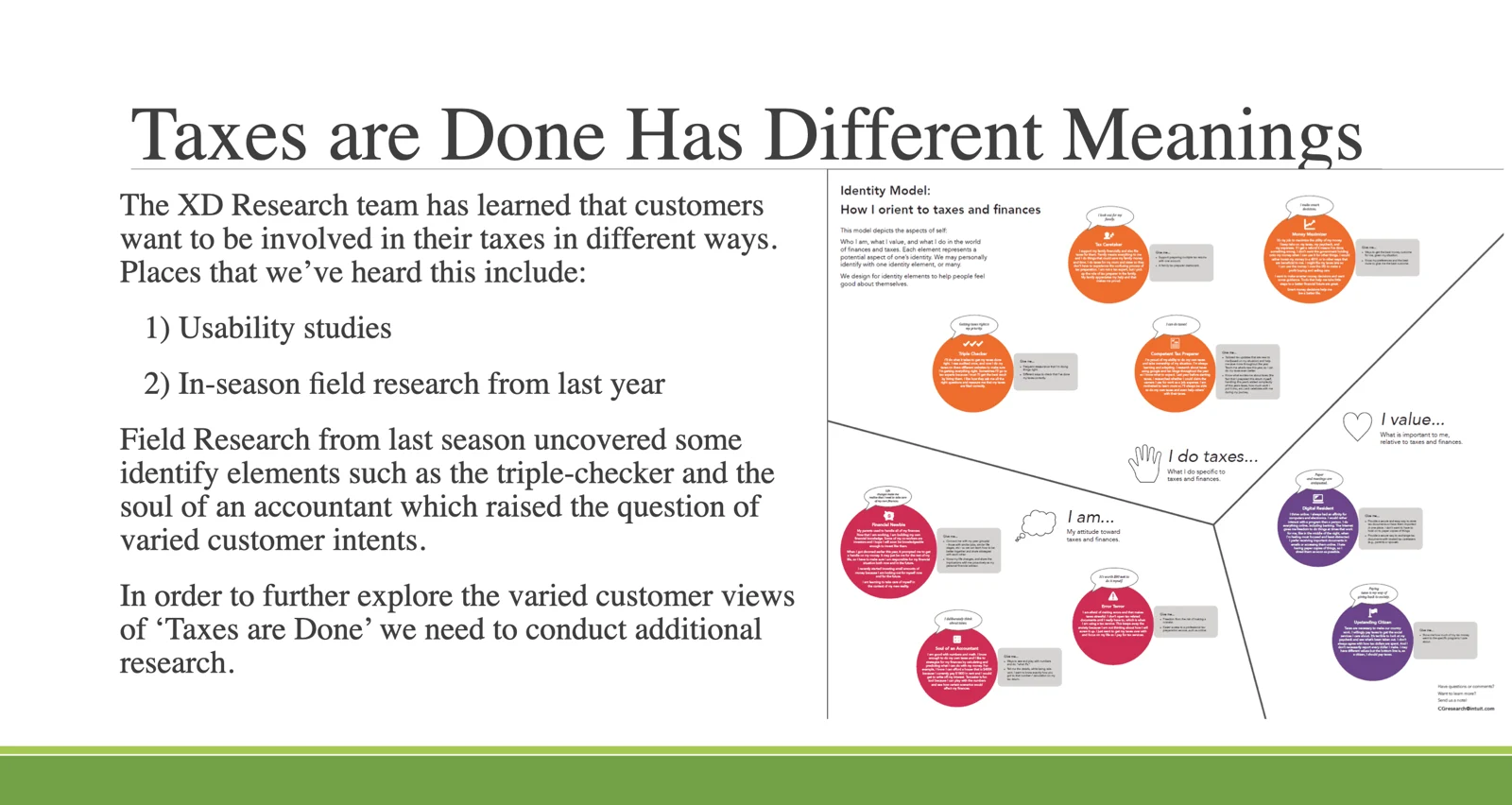
One research artifact distinguishes between meanings of “taxes are done.” People could feel finished at different points in the experience. Capturing those interpretations helped the design team decide where the interface needed to state what had happened and what remained.
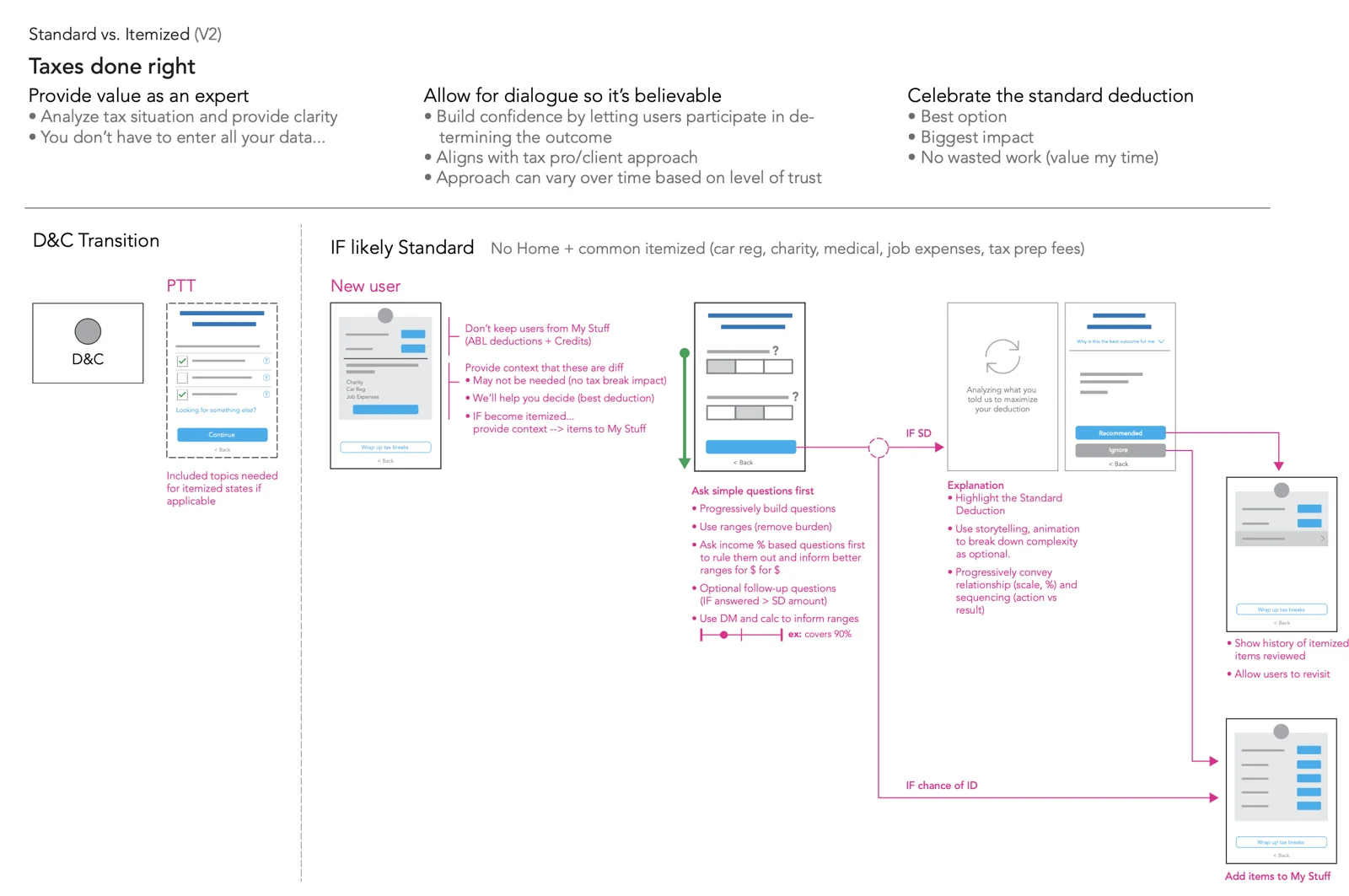
Annotated task flows brought the individual observations into a format designers and product partners could work from.
Turn observations into changes that could be tested
The team tested interface changes in prototypes and revised the filing flow around what it learned. The project writeup reports a 30% reduction in task completion time and a 20% improvement in user satisfaction scores after the redesign.
A parallel research track used contextual inquiry and journey maps to find moments where filers sought help. Contextual support cut help request volume by 25%, and interactive tutorials increased user confidence by 15%, according to the same writeup.